Personal - Career - Hamburg
From Istanbul to Hamburg -
and from web designer to UX designer
I did not plan to become a UX designer. I also did not plan to end up in Hamburg. The plan was Istanbul to Karlsruhe, a fresh start, some good opportunities. What actually happened was Istanbul, Karlsruhe, a global pandemic, getting completely stuck, Dresden, and then finally Hamburg.
This is the honest version of that story. Not the LinkedIn version where every move was a deliberate strategic decision. The actual version, which involves a lot of confusion, one very long lockdown, some questionable German, and at least one moment where I genuinely wondered what I was doing with my life.
Moving countries and changing disciplines at the same time is either very brave or very stupid. Moving countries three times while a pandemic rearranges all your plans is something else entirely. I am still figuring out what to call it.

Istanbul: I was a web designer. Sort of.
In Istanbul, I was doing what a lot of designers in agencies do: a bit of everything. Websites, graphics, print, branding, whatever the client needed that week. I was good at making things look nice. I was less good at understanding why they needed to look nice, or whether "nice" was even the right goal for a given problem.
I had worked across shipping, aviation, and agencies. I had a portfolio. I had clients. What I did not have was a framework for thinking about the people using the things I was designing. I was output-focused. Deliverable-focused. "Here is the finished design" focused. Which, I would later discover, is not exactly what UX is about.
But I did not know that yet. I was just making things.

Karlsruhe: the plan. And then Corona.
I moved to Karlsruhe with actual plans. A fresh start, new opportunities, Germany. It was going to be great.
And then 2020 happened. The whole world locked down, I was in Karlsruhe, and suddenly "building a new life in a new country" turned into "sitting in an apartment in Karlsruhe wondering when any of this would end." My professional network was not here. My friends were not here. The city was closed. Everyone's city was closed.
The pandemic was hard for everyone. For someone who had just arrived in a new country with no established roots, it was particularly disorienting. You cannot build a new life when everything is locked. You just wait. And then you wait some more. And then you get very good at cooking things you would never normally cook, which is not exactly a transferable career skill.
What I did do during that time was think. About what I wanted to actually do. About the gap between "making things look nice" and "making things work for people." About whether web design as I had practised it was enough, or whether there was a bigger question I had been ignoring.
Dresden: starting to figure it out
After Karlsruhe I moved to Dresden. Another city, another fresh start attempt. By this point I had developed a certain resilience about starting over - when you have done it a few times, it becomes less terrifying and more just tiring.
Dresden was where the shift started to happen properly. I was doing more structured design work, thinking more carefully about users, starting to use research as an actual input rather than a thing you mention in a presentation to sound credible. The questions I was asking about my work were getting better. Not the answers necessarily - the questions.
I also did the Ironhack UX bootcamp around this period. I am going to be honest: it was intense, fast, and some of it I already knew from experience. But it gave me a vocabulary for the things I had been doing instinctively, and a framework for the things I had been skipping entirely. User research. Persona development. Information architecture. Usability testing. I had heard these words. I had not been doing them systematically. The bootcamp made the gap visible. And once you can see a gap, you can close it.

Hamburg: where it finally clicked
Hamburg was not the plan either. But by the time I got here, I had stopped expecting my plans to survive contact with reality.
I also did the Ironhack UX bootcamp around this period. I am going to be honest: it was intense, fast, and some of it I already knew from experience. But it gave me a vocabulary for the things I had been doing instinctively, and a framework for the things I had been skipping entirely. User research. Persona development. Information architecture. Usability testing. I had heard these words. I had not been doing them systematically. The bootcamp made the gap visible. And once you can see a gap, you can close it.
Hamburg turned out to be exactly the right place. The design scene is serious. The clients are demanding in a way that makes your work better. Container xChange, then Sunzinet - projects with real complexity, real stakes, real users who needed things to actually work. Not just look good. Work.
German companies - at least the ones I ended up working with - were more process-oriented than what I was used to. More stakeholders. More "but did we validate this?" More documentation. At first I found this mildly irritating. Then I started to understand what it was actually for. The process existed because the stakes were higher. You cannot design a logistics platform for thousands of global users or an insurance website for someone filing a claim with a casual "make it look nice" approach. The rigour was the point.
And somewhere between Karlsruhe and Hamburg, between the lockdown and the logistics platforms and the insurance clients who questioned every pixel, the shift happened. I stopped being a web designer who thought about aesthetics and started being a UX designer who thinks about people. The aesthetics are still there. They just come after the thinking now.
What three cities and a pandemic actually taught me
The transition from web designer to UX designer is not a demotion or a promotion. It is a widening. You do not stop caring about how things look - you add a layer of caring about how they work and why.
Moving countries - three times, in my case, one of them mid-pandemic - is harder than any single career shift. Your network starts over every time. Your language is imperfect for longer than you expect. The cultural references you relied on in client meetings do not land the same way. You feel behind constantly.
But here is the thing. Having done all of that - being an outsider in three different cities, being a newcomer to a discipline, navigating all of it at the same time - gives you a perspective that staying put does not. You learn to ask questions that locals stopped asking years ago. You notice things that familiarity has made invisible. You get very good at starting over, which turns out to be one of the most useful skills there is.
I did not plan any of this. Istanbul, Karlsruhe, pandemic, Dresden, Hamburg. But I ended up exactly where I needed to be to become the designer I wanted to be. Sometimes the unplanned route is the right one. Even if it takes three cities to get there.
If you are thinking about making a similar move
Do it. But do it with realistic expectations. The first year is disorienting. The second year is better. The third is when you finally stop feeling like a guest and start feeling like you belong. And if a pandemic happens in the middle of it - well. You will figure it out. Everyone did.
more to discover
UX Analysis - Heuristics - Mobile
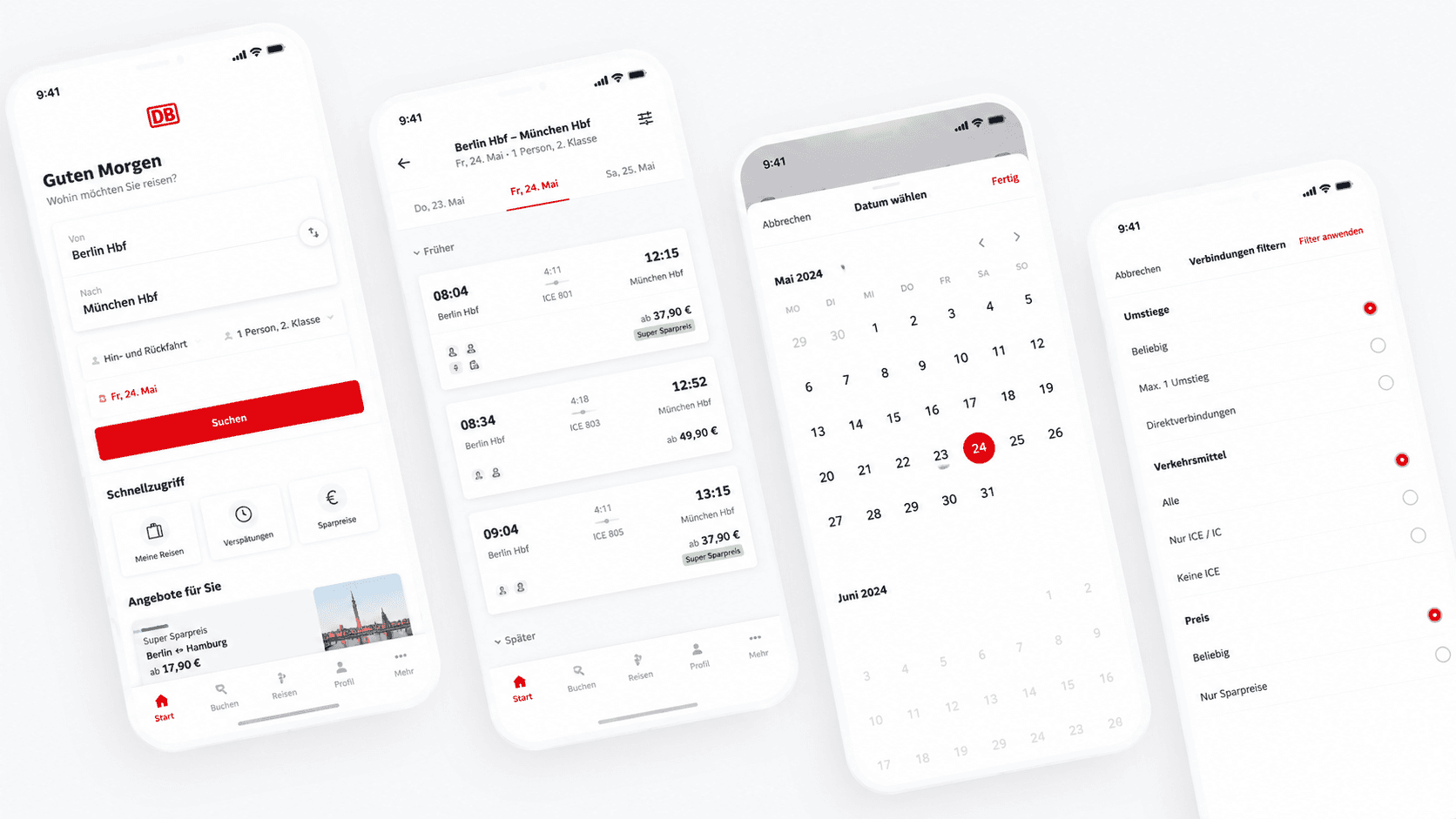
Dear DB Navigator: Two Date Issues That Cost Your Users Money
Good UX feedback isn't just "this is broken." It's "here's why it breaks, here's who it affects, and here's how to fix it."
Read More

Personal - Creative - Music
Playing in a band made me a better
UX designer. I am serious.
Nobody in a band ever said "I think we should add more here." The best musicians are the ones who know when to stop.
Read More
Personal - Career - Hamburg
From Istanbul to Hamburg -
and from web designer to UX designer
I did not plan to become a UX designer. I also did not plan to end up in Hamburg. The plan was Istanbul to Karlsruhe, a fresh start, some good opportunities. What actually happened was Istanbul, Karlsruhe, a global pandemic, getting completely stuck, Dresden, and then finally Hamburg.
This is the honest version of that story. Not the LinkedIn version where every move was a deliberate strategic decision. The actual version, which involves a lot of confusion, one very long lockdown, some questionable German, and at least one moment where I genuinely wondered what I was doing with my life.
Moving countries and changing disciplines at the same time is either very brave or very stupid. Moving countries three times while a pandemic rearranges all your plans is something else entirely. I am still figuring out what to call it.
Istanbul: I was a web designer. Sort of.
In Istanbul, I was doing what a lot of designers in agencies do: a bit of everything. Websites, graphics, print, branding, whatever the client needed that week. I was good at making things look nice. I was less good at understanding why they needed to look nice, or whether "nice" was even the right goal for a given problem.
I had worked across shipping, aviation, and agencies. I had a portfolio. I had clients. What I did not have was a framework for thinking about the people using the things I was designing. I was output-focused. Deliverable-focused. "Here is the finished design" focused. Which, I would later discover, is not exactly what UX is about.
But I did not know that yet. I was just making things.
Karlsruhe: the plan. And then Corona.
I moved to Karlsruhe with actual plans. A fresh start, new opportunities, Germany. It was going to be great.
And then 2020 happened. The whole world locked down, I was in Karlsruhe, and suddenly "building a new life in a new country" turned into "sitting in an apartment in Karlsruhe wondering when any of this would end." My professional network was not here. My friends were not here. The city was closed. Everyone's city was closed.
The pandemic was hard for everyone. For someone who had just arrived in a new country with no established roots, it was particularly disorienting. You cannot build a new life when everything is locked. You just wait. And then you wait some more. And then you get very good at cooking things you would never normally cook, which is not exactly a transferable career skill.
What I did do during that time was think. About what I wanted to actually do. About the gap between "making things look nice" and "making things work for people." About whether web design as I had practised it was enough, or whether there was a bigger question I had been ignoring.
Dresden: starting to figure it out
After Karlsruhe I moved to Dresden. Another city, another fresh start attempt. By this point I had developed a certain resilience about starting over - when you have done it a few times, it becomes less terrifying and more just tiring.
Dresden was where the shift started to happen properly. I was doing more structured design work, thinking more carefully about users, starting to use research as an actual input rather than a thing you mention in a presentation to sound credible. The questions I was asking about my work were getting better. Not the answers necessarily - the questions.
I also did the Ironhack UX bootcamp around this period. I am going to be honest: it was intense, fast, and some of it I already knew from experience. But it gave me a vocabulary for the things I had been doing instinctively, and a framework for the things I had been skipping entirely. User research. Persona development. Information architecture. Usability testing. I had heard these words. I had not been doing them systematically. The bootcamp made the gap visible. And once you can see a gap, you can close it.
Hamburg: where it finally clicked
Hamburg was not the plan either. But by the time I got here, I had stopped expecting my plans to survive contact with reality.
I also did the Ironhack UX bootcamp around this period. I am going to be honest: it was intense, fast, and some of it I already knew from experience. But it gave me a vocabulary for the things I had been doing instinctively, and a framework for the things I had been skipping entirely. User research. Persona development. Information architecture. Usability testing. I had heard these words. I had not been doing them systematically. The bootcamp made the gap visible. And once you can see a gap, you can close it.
Hamburg turned out to be exactly the right place. The design scene is serious. The clients are demanding in a way that makes your work better. Container xChange, then Sunzinet - projects with real complexity, real stakes, real users who needed things to actually work. Not just look good. Work.
German companies - at least the ones I ended up working with - were more process-oriented than what I was used to. More stakeholders. More "but did we validate this?" More documentation. At first I found this mildly irritating. Then I started to understand what it was actually for. The process existed because the stakes were higher. You cannot design a logistics platform for thousands of global users or an insurance website for someone filing a claim with a casual "make it look nice" approach. The rigour was the point.
And somewhere between Karlsruhe and Hamburg, between the lockdown and the logistics platforms and the insurance clients who questioned every pixel, the shift happened. I stopped being a web designer who thought about aesthetics and started being a UX designer who thinks about people. The aesthetics are still there. They just come after the thinking now.
What three cities and a pandemic actually taught me
The transition from web designer to UX designer is not a demotion or a promotion. It is a widening. You do not stop caring about how things look - you add a layer of caring about how they work and why.
Moving countries - three times, in my case, one of them mid-pandemic - is harder than any single career shift. Your network starts over every time. Your language is imperfect for longer than you expect. The cultural references you relied on in client meetings do not land the same way. You feel behind constantly.
But here is the thing. Having done all of that - being an outsider in three different cities, being a newcomer to a discipline, navigating all of it at the same time - gives you a perspective that staying put does not. You learn to ask questions that locals stopped asking years ago. You notice things that familiarity has made invisible. You get very good at starting over, which turns out to be one of the most useful skills there is.
I did not plan any of this. Istanbul, Karlsruhe, pandemic, Dresden, Hamburg. But I ended up exactly where I needed to be to become the designer I wanted to be. Sometimes the unplanned route is the right one. Even if it takes three cities to get there.
If you are thinking about making a similar move
Do it. But do it with realistic expectations. The first year is disorienting. The second year is better. The third is when you finally stop feeling like a guest and start feeling like you belong. And if a pandemic happens in the middle of it - well. You will figure it out. Everyone did.
more to discover
UX Analysis - Heuristics - Mobile
Dear DB Navigator: Two Date Issues That Cost Your Users Money
Good UX feedback isn't just "this is broken." It's "here's why it breaks, here's who it affects, and here's how to fix it."
Read More
Personal - Creative - Music
Playing in a band made me a better
UX designer. I am serious.
Nobody in a band ever said "I think we should add more here." The best musicians are the ones who know when to stop.
Read More
Personal - Career - Hamburg
From Istanbul to Hamburg -
and from web designer to UX designer
I did not plan to become a UX designer. I also did not plan to end up in Hamburg. The plan was Istanbul to Karlsruhe, a fresh start, some good opportunities. What actually happened was Istanbul, Karlsruhe, a global pandemic, getting completely stuck, Dresden, and then finally Hamburg.
This is the honest version of that story. Not the LinkedIn version where every move was a deliberate strategic decision. The actual version, which involves a lot of confusion, one very long lockdown, some questionable German, and at least one moment where I genuinely wondered what I was doing with my life.
Moving countries and changing disciplines at the same time is either very brave or very stupid. Moving countries three times while a pandemic rearranges all your plans is something else entirely. I am still figuring out what to call it.
Istanbul: I was a web designer. Sort of.
In Istanbul, I was doing what a lot of designers in agencies do: a bit of everything. Websites, graphics, print, branding, whatever the client needed that week. I was good at making things look nice. I was less good at understanding why they needed to look nice, or whether "nice" was even the right goal for a given problem.
I had worked across shipping, aviation, and agencies. I had a portfolio. I had clients. What I did not have was a framework for thinking about the people using the things I was designing. I was output-focused. Deliverable-focused. "Here is the finished design" focused. Which, I would later discover, is not exactly what UX is about.
But I did not know that yet. I was just making things.
Karlsruhe: the plan. And then Corona.
I moved to Karlsruhe with actual plans. A fresh start, new opportunities, Germany. It was going to be great.
And then 2020 happened. The whole world locked down, I was in Karlsruhe, and suddenly "building a new life in a new country" turned into "sitting in an apartment in Karlsruhe wondering when any of this would end." My professional network was not here. My friends were not here. The city was closed. Everyone's city was closed.
The pandemic was hard for everyone. For someone who had just arrived in a new country with no established roots, it was particularly disorienting. You cannot build a new life when everything is locked. You just wait. And then you wait some more. And then you get very good at cooking things you would never normally cook, which is not exactly a transferable career skill.
What I did do during that time was think. About what I wanted to actually do. About the gap between "making things look nice" and "making things work for people." About whether web design as I had practised it was enough, or whether there was a bigger question I had been ignoring.
Dresden: starting to figure it out
After Karlsruhe I moved to Dresden. Another city, another fresh start attempt. By this point I had developed a certain resilience about starting over - when you have done it a few times, it becomes less terrifying and more just tiring.
Dresden was where the shift started to happen properly. I was doing more structured design work, thinking more carefully about users, starting to use research as an actual input rather than a thing you mention in a presentation to sound credible. The questions I was asking about my work were getting better. Not the answers necessarily - the questions.
I also did the Ironhack UX bootcamp around this period. I am going to be honest: it was intense, fast, and some of it I already knew from experience. But it gave me a vocabulary for the things I had been doing instinctively, and a framework for the things I had been skipping entirely. User research. Persona development. Information architecture. Usability testing. I had heard these words. I had not been doing them systematically. The bootcamp made the gap visible. And once you can see a gap, you can close it.
Hamburg: where it finally clicked
Hamburg was not the plan either. But by the time I got here, I had stopped expecting my plans to survive contact with reality.
I also did the Ironhack UX bootcamp around this period. I am going to be honest: it was intense, fast, and some of it I already knew from experience. But it gave me a vocabulary for the things I had been doing instinctively, and a framework for the things I had been skipping entirely. User research. Persona development. Information architecture. Usability testing. I had heard these words. I had not been doing them systematically. The bootcamp made the gap visible. And once you can see a gap, you can close it.
Hamburg turned out to be exactly the right place. The design scene is serious. The clients are demanding in a way that makes your work better. Container xChange, then Sunzinet - projects with real complexity, real stakes, real users who needed things to actually work. Not just look good. Work.
German companies - at least the ones I ended up working with - were more process-oriented than what I was used to. More stakeholders. More "but did we validate this?" More documentation. At first I found this mildly irritating. Then I started to understand what it was actually for. The process existed because the stakes were higher. You cannot design a logistics platform for thousands of global users or an insurance website for someone filing a claim with a casual "make it look nice" approach. The rigour was the point.
And somewhere between Karlsruhe and Hamburg, between the lockdown and the logistics platforms and the insurance clients who questioned every pixel, the shift happened. I stopped being a web designer who thought about aesthetics and started being a UX designer who thinks about people. The aesthetics are still there. They just come after the thinking now.
What three cities and a pandemic actually taught me
The transition from web designer to UX designer is not a demotion or a promotion. It is a widening. You do not stop caring about how things look - you add a layer of caring about how they work and why.
Moving countries - three times, in my case, one of them mid-pandemic - is harder than any single career shift. Your network starts over every time. Your language is imperfect for longer than you expect. The cultural references you relied on in client meetings do not land the same way. You feel behind constantly.
But here is the thing. Having done all of that - being an outsider in three different cities, being a newcomer to a discipline, navigating all of it at the same time - gives you a perspective that staying put does not. You learn to ask questions that locals stopped asking years ago. You notice things that familiarity has made invisible. You get very good at starting over, which turns out to be one of the most useful skills there is.
I did not plan any of this. Istanbul, Karlsruhe, pandemic, Dresden, Hamburg. But I ended up exactly where I needed to be to become the designer I wanted to be. Sometimes the unplanned route is the right one. Even if it takes three cities to get there.
If you are thinking about making a similar move
Do it. But do it with realistic expectations. The first year is disorienting. The second year is better. The third is when you finally stop feeling like a guest and start feeling like you belong. And if a pandemic happens in the middle of it - well. You will figure it out. Everyone did.
more to discover
UX Analysis - Heuristics - Mobile
Dear DB Navigator: Two Date Issues That Cost Your Users Money
Good UX feedback isn't just "this is broken." It's "here's why it breaks, here's who it affects, and here's how to fix it."
Read More
Personal - Creative - Music
Playing in a band made me a better
UX designer. I am serious.
Nobody in a band ever said "I think we should add more here." The best musicians are the ones who know when to stop.