Personal - Creative - Music
Playing in a band made me a better
UX designer. I am serious.
I know how this sounds. I can already picture someone reading the title and thinking "okay, another designer trying to make their hobby sound relevant." Bear with me. I promise this is not that.
I played in a band for years. And somewhere between rehearsals and the specific kind of frustration that comes from trying to get five people to agree on a tempo, I started noticing that the things making us fail as a band were exactly the same things that make design teams fail. And the things that made us good were the same things that make design work good.
Nobody in a band ever said "I think we should add more here." The best musicians are the ones who know when to stop.

Lesson 1 - Listening is the actual skill
When you first start playing in a band, you listen to yourself. You are concentrating on hitting the right notes, staying in time, not making the embarrassing mistake you made last week. You are entirely focused on your own output.
The moment you become a better musician is when you stop listening to yourself and start listening to everyone else. You hear the drummer change the feel slightly and you adjust. You hear the guitarist drop out for a bar and you fill the space. You are no longer playing your part - you are playing your part in relation to everyone else's part.
This is exactly what separates a good designer from a good collaborator. Early in my career I was focused on my own output. Here is my design, here are my decisions. The shift happened when I started truly listening - to developers explaining constraints, to stakeholders articulating fears they did not know how to name, to users describing problems in language that was not design language at all. You cannot design well for people you are not genuinely listening to. And listening is a skill you have to practice. Bands are surprisingly good practice.

Lesson 2 - Restraint is a creative decision
There is a type of musician that plays too many notes. They are technically skilled. They can do impressive things. And they make every song exhausting to listen to because there is no breathing room, no space, no rest. Everything is full. Everything is loud. There is nowhere for the music to go.
The best musicians I have played with know when to stop. They know that a pause is as musical as a note. That the space between things is part of the composition. That adding less is often the harder and better choice.
I think about this constantly when I am designing. The instinct - especially early in a project, especially when you are excited about the problem - is to add. Another feature. Another element. Another interaction. Another way to solve it. The discipline is knowing which of those additions actually serve the user and which ones are just you playing too many notes.
White space is not emptiness. It is breathing room. Removing a feature that does not resonate in testing is not failure - it is editing. The best designs, like the best music, leave space for the person experiencing them to exist in.
Lesson 3 - Ego is the enemy of the ensemble
Bands fall apart for a lot of reasons. Creative differences is the polite way of putting it. The real reason is usually that someone's ego got too large for the room.
Someone decides their part is the most important part. Someone stops adjusting to the rest of the group and starts expecting the rest of the group to adjust to them. Someone prioritises sounding impressive over sounding good together. And then suddenly five people who used to make something enjoyable are making something that nobody wants to listen to, including themselves.
Design teams fail the same way. The designer who decides their vision is non-negotiable. The one who treats developer feedback as interference rather than input. The one who is more interested in a beautiful portfolio piece than in solving the actual problem. The work suffers. The team suffers. And the user - who is supposed to be the whole point - gets forgotten somewhere in the argument about font sizes.
A band works when everyone's contribution serves the song. A design team works when everyone's contribution serves the user. The moment it starts serving someone's ego instead, you can hear it. And it does not sound good.

Lesson 4 - Timing is everything. Literally.
In music, a technically correct note played at the wrong time is still wrong. You can hit the right pitch, the right key, the right chord - and if your timing is off, it sounds wrong. Timing is not a secondary concern. It is fundamental.
Presenting a design concept to a stakeholder before you understand the brief is bad timing. Shipping a feature before the infrastructure is ready is bad timing. Running usability testing after the handoff is already done is very bad timing - you will find all the problems and be unable to fix any of them.
The sequence matters as much as the content. Research before wireframes. Wireframes before high-fidelity. Testing before handoff. System before screens. Every time I have pushed something earlier in the process than it should have gone, something went wrong. Not because the work was bad - but because it was the right note at the wrong moment.
Lesson 5 - Rehearsal is not the performance, but it makes the performance possible
Nobody performs a concert without rehearsing. Nobody improvises well without having practised the fundamentals so thoroughly that they become instinct. The rehearsal is where you make the mistakes, figure out what does not work, argue about the arrangement, and get it wrong in a room where it does not matter.
Lo-fi wireframes are rehearsal. Prototypes are rehearsal. Usability testing is rehearsal. They are not the final product - they are the work you do so that the final product can be good. The designers who skip rehearsal because they are confident in their instincts are the ones whose work falls apart in front of users who did not get the memo about how good the designer's instincts were supposed to be.
I have never regretted doing another round of testing. I have regretted skipping one.
The actual takeaway
If you do something creative outside of design - play music, write, paint, act, cook, garden - pay attention to what that thing teaches you. The skills rarely transfer directly. The principles almost always do. Your brain is making connections whether you notice them or not. You might as well notice them.
And if anyone is looking for a UX designer who can also hold a rhythm section together under pressure - I am available. For the design work, I mean. The band already has enough members.
more to discover

Most Viewed
Dark UX - Ethics - Personal
My mum got scammed by a beautifully
designed app. That broke something in me.
Scammers used to rely on bad grammar and obvious lies. Now some of them are hiring designers. And that changes everything.
Read More
UX Analysis - Good Design
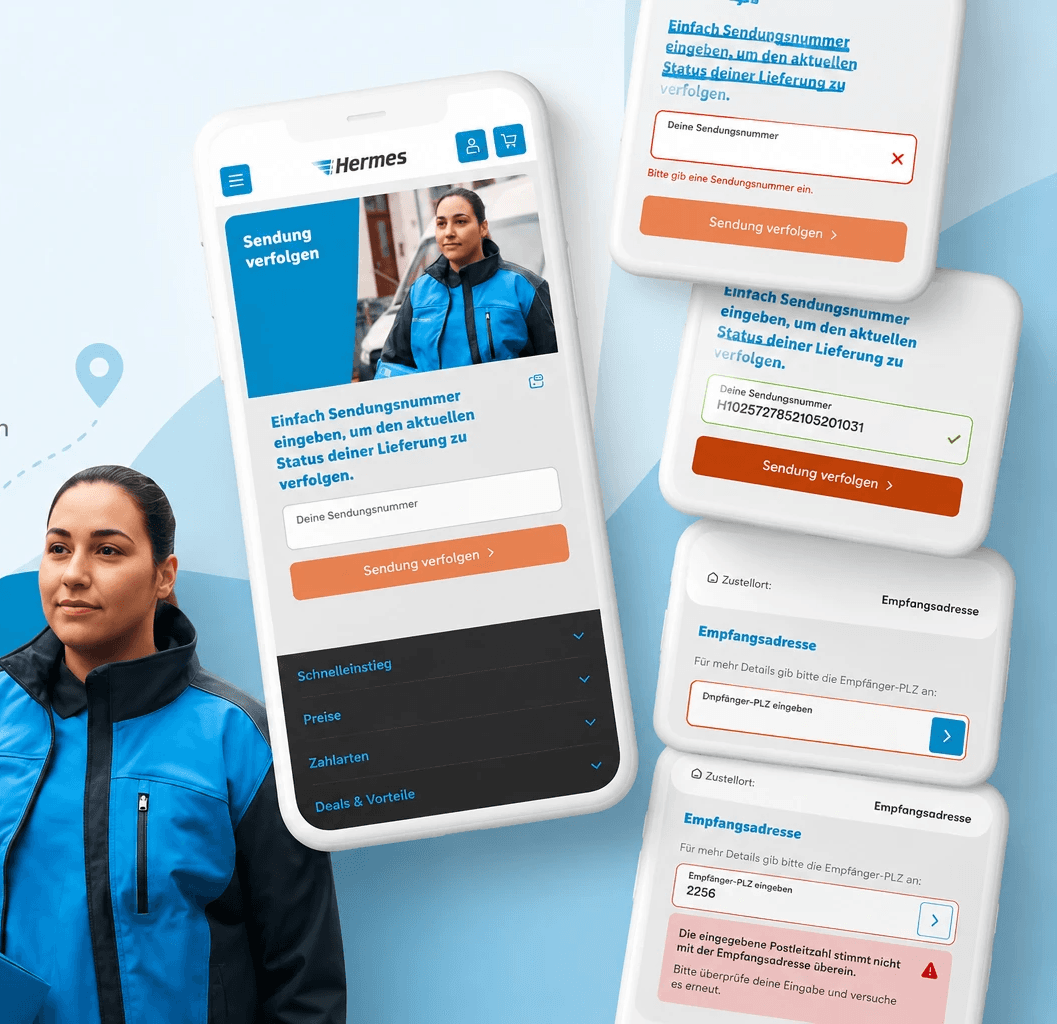
A small UX win: how Hermes gets parcel tracking right
So it is only fair to call it out when an app actually gets the details right. This week that app is Hermes.
Read More
Personal - Creative - Music
Playing in a band made me a better
UX designer. I am serious.
I know how this sounds. I can already picture someone reading the title and thinking "okay, another designer trying to make their hobby sound relevant." Bear with me. I promise this is not that.
I played in a band for years. And somewhere between rehearsals and the specific kind of frustration that comes from trying to get five people to agree on a tempo, I started noticing that the things making us fail as a band were exactly the same things that make design teams fail. And the things that made us good were the same things that make design work good.
Nobody in a band ever said "I think we should add more here." The best musicians are the ones who know when to stop.
Lesson 1 - Listening is the actual skill
When you first start playing in a band, you listen to yourself. You are concentrating on hitting the right notes, staying in time, not making the embarrassing mistake you made last week. You are entirely focused on your own output.
The moment you become a better musician is when you stop listening to yourself and start listening to everyone else. You hear the drummer change the feel slightly and you adjust. You hear the guitarist drop out for a bar and you fill the space. You are no longer playing your part - you are playing your part in relation to everyone else's part.
This is exactly what separates a good designer from a good collaborator. Early in my career I was focused on my own output. Here is my design, here are my decisions. The shift happened when I started truly listening - to developers explaining constraints, to stakeholders articulating fears they did not know how to name, to users describing problems in language that was not design language at all. You cannot design well for people you are not genuinely listening to. And listening is a skill you have to practice. Bands are surprisingly good practice.
Lesson 2 - Restraint is a creative decision
There is a type of musician that plays too many notes. They are technically skilled. They can do impressive things. And they make every song exhausting to listen to because there is no breathing room, no space, no rest. Everything is full. Everything is loud. There is nowhere for the music to go.
The best musicians I have played with know when to stop. They know that a pause is as musical as a note. That the space between things is part of the composition. That adding less is often the harder and better choice.
I think about this constantly when I am designing. The instinct - especially early in a project, especially when you are excited about the problem - is to add. Another feature. Another element. Another interaction. Another way to solve it. The discipline is knowing which of those additions actually serve the user and which ones are just you playing too many notes.
White space is not emptiness. It is breathing room. Removing a feature that does not resonate in testing is not failure - it is editing. The best designs, like the best music, leave space for the person experiencing them to exist in.
Lesson 3 - Ego is the enemy of the ensemble
Bands fall apart for a lot of reasons. Creative differences is the polite way of putting it. The real reason is usually that someone's ego got too large for the room.
Someone decides their part is the most important part. Someone stops adjusting to the rest of the group and starts expecting the rest of the group to adjust to them. Someone prioritises sounding impressive over sounding good together. And then suddenly five people who used to make something enjoyable are making something that nobody wants to listen to, including themselves.
Design teams fail the same way. The designer who decides their vision is non-negotiable. The one who treats developer feedback as interference rather than input. The one who is more interested in a beautiful portfolio piece than in solving the actual problem. The work suffers. The team suffers. And the user - who is supposed to be the whole point - gets forgotten somewhere in the argument about font sizes.
A band works when everyone's contribution serves the song. A design team works when everyone's contribution serves the user. The moment it starts serving someone's ego instead, you can hear it. And it does not sound good.
Lesson 4 - Timing is everything. Literally.
In music, a technically correct note played at the wrong time is still wrong. You can hit the right pitch, the right key, the right chord - and if your timing is off, it sounds wrong. Timing is not a secondary concern. It is fundamental.
Presenting a design concept to a stakeholder before you understand the brief is bad timing. Shipping a feature before the infrastructure is ready is bad timing. Running usability testing after the handoff is already done is very bad timing - you will find all the problems and be unable to fix any of them.
The sequence matters as much as the content. Research before wireframes. Wireframes before high-fidelity. Testing before handoff. System before screens. Every time I have pushed something earlier in the process than it should have gone, something went wrong. Not because the work was bad - but because it was the right note at the wrong moment.
Lesson 5 - Rehearsal is not the performance, but it makes the performance possible
Nobody performs a concert without rehearsing. Nobody improvises well without having practised the fundamentals so thoroughly that they become instinct. The rehearsal is where you make the mistakes, figure out what does not work, argue about the arrangement, and get it wrong in a room where it does not matter.
Lo-fi wireframes are rehearsal. Prototypes are rehearsal. Usability testing is rehearsal. They are not the final product - they are the work you do so that the final product can be good. The designers who skip rehearsal because they are confident in their instincts are the ones whose work falls apart in front of users who did not get the memo about how good the designer's instincts were supposed to be.
I have never regretted doing another round of testing. I have regretted skipping one.
The actual takeaway
If you do something creative outside of design - play music, write, paint, act, cook, garden - pay attention to what that thing teaches you. The skills rarely transfer directly. The principles almost always do. Your brain is making connections whether you notice them or not. You might as well notice them.
And if anyone is looking for a UX designer who can also hold a rhythm section together under pressure - I am available. For the design work, I mean. The band already has enough members.
more to discover
Most Viewed
Dark UX - Ethics - Personal
My mum got scammed by a beautifully
designed app. That broke something in me.
Scammers used to rely on bad grammar and obvious lies. Now some of them are hiring designers. And that changes everything.
Read More
UX Analysis - Good Design
A small UX win: how Hermes gets parcel tracking right
So it is only fair to call it out when an app actually gets the details right. This week that app is Hermes.
Read More
Personal - Creative - Music
Playing in a band made me a better
UX designer. I am serious.
I know how this sounds. I can already picture someone reading the title and thinking "okay, another designer trying to make their hobby sound relevant." Bear with me. I promise this is not that.
I played in a band for years. And somewhere between rehearsals and the specific kind of frustration that comes from trying to get five people to agree on a tempo, I started noticing that the things making us fail as a band were exactly the same things that make design teams fail. And the things that made us good were the same things that make design work good.
Nobody in a band ever said "I think we should add more here." The best musicians are the ones who know when to stop.
Lesson 1 - Listening is the actual skill
When you first start playing in a band, you listen to yourself. You are concentrating on hitting the right notes, staying in time, not making the embarrassing mistake you made last week. You are entirely focused on your own output.
The moment you become a better musician is when you stop listening to yourself and start listening to everyone else. You hear the drummer change the feel slightly and you adjust. You hear the guitarist drop out for a bar and you fill the space. You are no longer playing your part - you are playing your part in relation to everyone else's part.
This is exactly what separates a good designer from a good collaborator. Early in my career I was focused on my own output. Here is my design, here are my decisions. The shift happened when I started truly listening - to developers explaining constraints, to stakeholders articulating fears they did not know how to name, to users describing problems in language that was not design language at all. You cannot design well for people you are not genuinely listening to. And listening is a skill you have to practice. Bands are surprisingly good practice.
Lesson 2 - Restraint is a creative decision
There is a type of musician that plays too many notes. They are technically skilled. They can do impressive things. And they make every song exhausting to listen to because there is no breathing room, no space, no rest. Everything is full. Everything is loud. There is nowhere for the music to go.
The best musicians I have played with know when to stop. They know that a pause is as musical as a note. That the space between things is part of the composition. That adding less is often the harder and better choice.
I think about this constantly when I am designing. The instinct - especially early in a project, especially when you are excited about the problem - is to add. Another feature. Another element. Another interaction. Another way to solve it. The discipline is knowing which of those additions actually serve the user and which ones are just you playing too many notes.
White space is not emptiness. It is breathing room. Removing a feature that does not resonate in testing is not failure - it is editing. The best designs, like the best music, leave space for the person experiencing them to exist in.
Lesson 3 - Ego is the enemy of the ensemble
Bands fall apart for a lot of reasons. Creative differences is the polite way of putting it. The real reason is usually that someone's ego got too large for the room.
Someone decides their part is the most important part. Someone stops adjusting to the rest of the group and starts expecting the rest of the group to adjust to them. Someone prioritises sounding impressive over sounding good together. And then suddenly five people who used to make something enjoyable are making something that nobody wants to listen to, including themselves.
Design teams fail the same way. The designer who decides their vision is non-negotiable. The one who treats developer feedback as interference rather than input. The one who is more interested in a beautiful portfolio piece than in solving the actual problem. The work suffers. The team suffers. And the user - who is supposed to be the whole point - gets forgotten somewhere in the argument about font sizes.
A band works when everyone's contribution serves the song. A design team works when everyone's contribution serves the user. The moment it starts serving someone's ego instead, you can hear it. And it does not sound good.
Lesson 4 - Timing is everything. Literally.
In music, a technically correct note played at the wrong time is still wrong. You can hit the right pitch, the right key, the right chord - and if your timing is off, it sounds wrong. Timing is not a secondary concern. It is fundamental.
Presenting a design concept to a stakeholder before you understand the brief is bad timing. Shipping a feature before the infrastructure is ready is bad timing. Running usability testing after the handoff is already done is very bad timing - you will find all the problems and be unable to fix any of them.
The sequence matters as much as the content. Research before wireframes. Wireframes before high-fidelity. Testing before handoff. System before screens. Every time I have pushed something earlier in the process than it should have gone, something went wrong. Not because the work was bad - but because it was the right note at the wrong moment.
Lesson 5 - Rehearsal is not the performance, but it makes the performance possible
Nobody performs a concert without rehearsing. Nobody improvises well without having practised the fundamentals so thoroughly that they become instinct. The rehearsal is where you make the mistakes, figure out what does not work, argue about the arrangement, and get it wrong in a room where it does not matter.
Lo-fi wireframes are rehearsal. Prototypes are rehearsal. Usability testing is rehearsal. They are not the final product - they are the work you do so that the final product can be good. The designers who skip rehearsal because they are confident in their instincts are the ones whose work falls apart in front of users who did not get the memo about how good the designer's instincts were supposed to be.
I have never regretted doing another round of testing. I have regretted skipping one.
The actual takeaway
If you do something creative outside of design - play music, write, paint, act, cook, garden - pay attention to what that thing teaches you. The skills rarely transfer directly. The principles almost always do. Your brain is making connections whether you notice them or not. You might as well notice them.
And if anyone is looking for a UX designer who can also hold a rhythm section together under pressure - I am available. For the design work, I mean. The band already has enough members.
more to discover
Most Viewed
Dark UX - Ethics - Personal
My mum got scammed by a beautifully
designed app. That broke something in me.
Scammers used to rely on bad grammar and obvious lies. Now some of them are hiring designers. And that changes everything.
Read More
UX Analysis - Good Design
A small UX win: how Hermes gets parcel tracking right
So it is only fair to call it out when an app actually gets the details right. This week that app is Hermes.